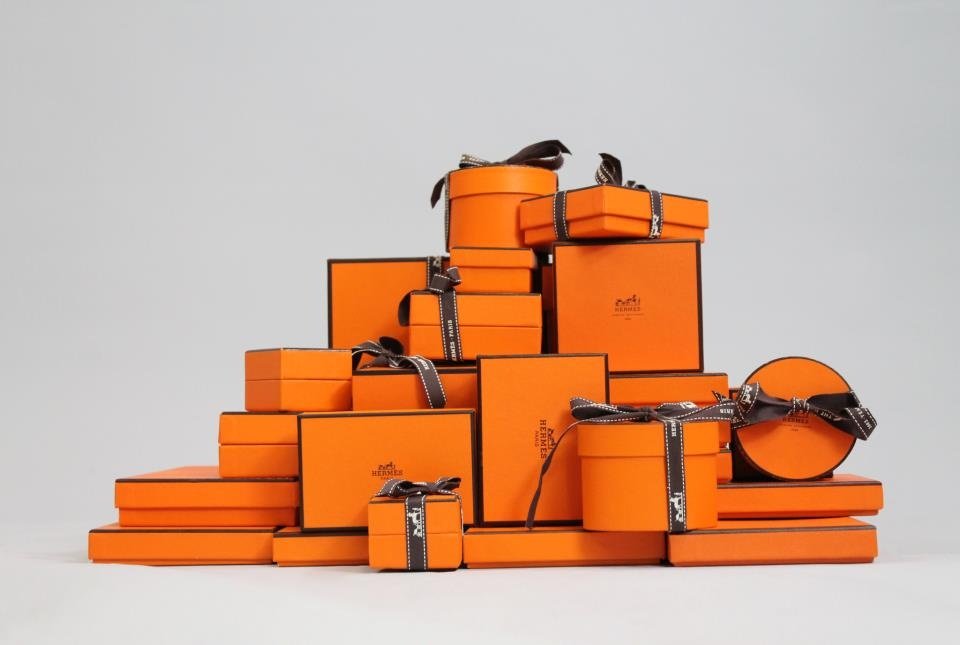
The Story Behind the Hermès Orange Box
AN ICONIC COLOR BORN FROM NECESSITY
For collectors and enthusiasts, the Hermès orange box is instantly recognizable — but its iconic color wasn’t a deliberate branding decision. It was a result of wartime necessity.
Why Hermès Chose Orange
During World War II, traditional packaging materials were limited. Hermès originally used cream-colored boxes with brown trim, but when those materials became unavailable, the only cardboard the atelier could source was a vibrant orange stock. Instead of viewing it as a limitation, Hermès embraced it. The orange box became a signature of resilience, adaptability, and craftsmanship during a period when luxury production was anything but simple.

Over the decades, the orange box evolved into one of the most recognizable symbols in the luxury world. Each box is carefully crafted, using rigid cardboard and a precise shade known internally as “orange Hermès.” The brown edging and the iconic logo stamped in crisp black complete what collectors now consider part of the Hermès experience — a keepsake in its own right.

Despite modern manufacturing, Hermès still treats its boxes as part of its heritage. They remain entirely recyclable, are constructed with exceptional durability, and are designed to be reused and cherished. Many longtime collectors even track box variations by era, as subtle differences in tone, trim, and materials give clues to when a piece was originally sold.

At Randolph Goods, we love sharing the stories behind the craftsmanship. Whether it’s an iconic box or a rare leather, these details help illuminate why Hermès remains one of the most respected maisons in the world.
 Previous Post
 Next Post